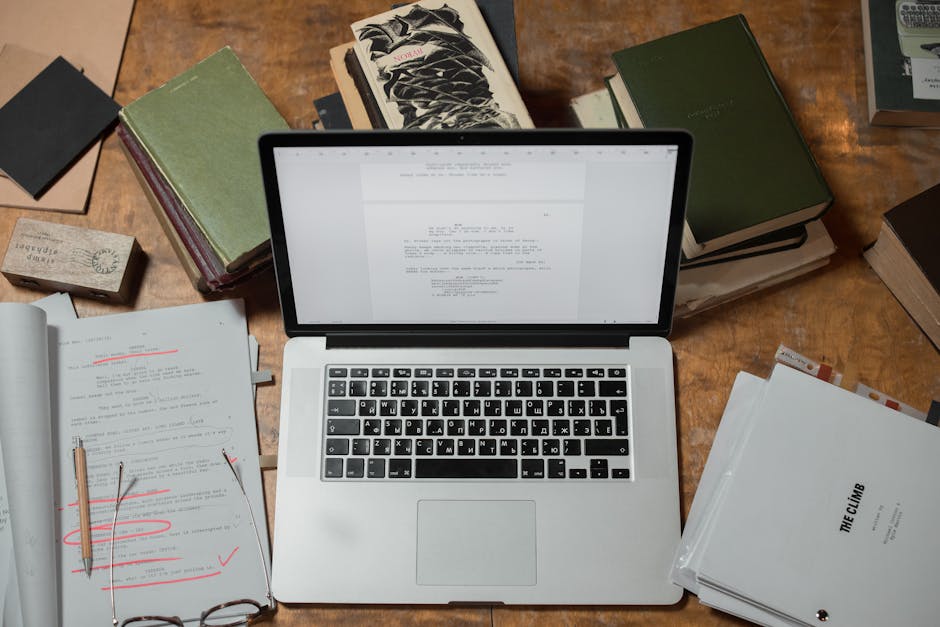
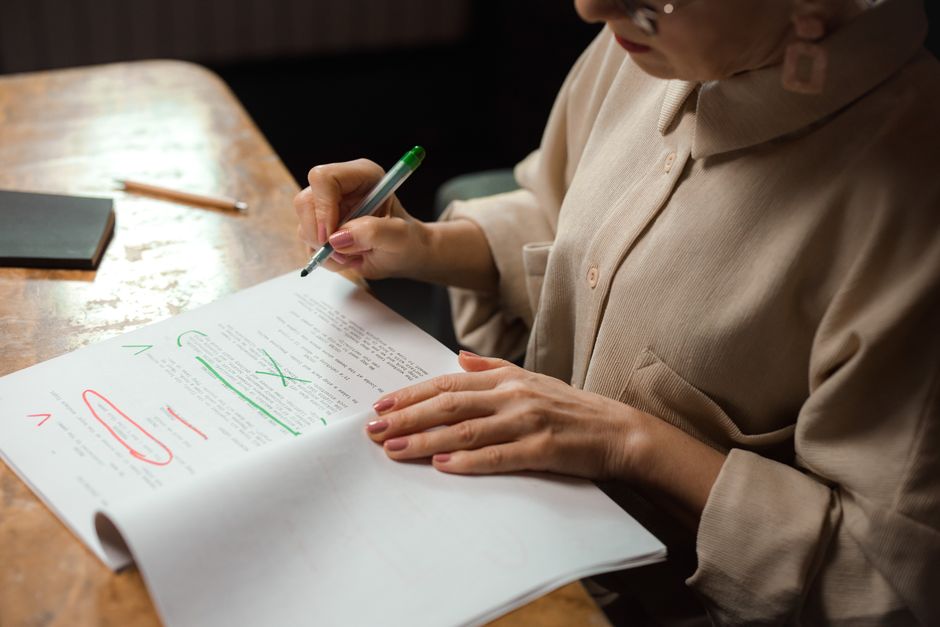
Proofreading a manuscript before publication is the difference between a polished, professional book and one full of embarrassing errors. It's the final quality check that catches typos, grammar mistakes, and inconsistencies that slipped past earlier edits.
Here's the honest truth: you can't proofread your own work well. Your brain knows what you meant to write, so it skips right over mistakes. That's why professional publishers treat proofreading as a dedicated step with its own techniques and best practices. Let's walk through how to do this right.
Why Proofreading Matters for Your Manuscript
Proofreading is distinct from copyediting. Copyediting fixes style, tone, and flow. Proofreading catches what's left: typos, spacing issues, formatting errors, and one-off grammar mistakes.
Related: Copyediting and Proofreading for Publishers: A Complete Guide
Related: What Is an Online Book Editor? A Complete Guide
Related: How to Print Your Book: A Complete Guide
Related: What Is an Ebook Maker? Complete Guide for Authors
Related: What Is Book Editing? A Complete Guide for Authors
Related: What Does a Book Editor Do? Complete Guide
Related: Accessible EPUB Conversion for Publishers: A Complete Guide
Related: Textbook to LMS Conversion for Publishers: A Complete Guide
Related: APA Book Citation Format: Complete Guide & Examples
Related: Multilingual Book Composition Services: A Complete Guide
A manuscript that hasn't been proofread looks unfinished. Readers notice. Reviewers notice. Agents and publishers definitely notice. One small typo in the first chapter creates doubt about the entire book's quality.
Related: Preparing a Manuscript for Typesetting: A Complete Guide
Professional proofreading covers three primary areas: grammar, style consistency, and factual accuracy. When you finish this step, your manuscript is truly publication-ready.
Related: Book Layout: A Complete Guide to Professional Design
Related: Book Formatting: A Complete Guide to Professional Layout
Related: What Professional Book Editors Do: A Complete Guide
Step 1: Take a Break Before You Start
This is the most important step, and most people skip it. Put your manuscript away for at least a week. Two weeks is even better.
Your brain needs distance to see errors. When you've been living inside a manuscript for months, you're too close to it. A break resets your perspective and dramatically improves your ability to catch mistakes.
Use this time to work on something else entirely. When you come back to your manuscript, you'll read it like a fresh pair of eyes.
Step 2: Print It Out
Proofreading on-screen is significantly less effective than proofreading on paper. Your eye moves differently on the page. You catch typos you'd miss on a monitor.
Print your full manuscript double-spaced. Use a standard font like Times New Roman or Arial. The extra space between lines gives you room to mark corrections.
If printing the whole thing feels wasteful, at least print problem chapters or sections. You'll be shocked at what jumps out on paper that you couldn't see on your screen.
Step 3: Read Slowly and Deliberately

Don't read for meaning. Read for errors. This sounds weird, but it's the key to effective proofreading.
When you read for meaning, your brain fills in gaps and corrects mistakes automatically. You're looking for story flow and emotional impact. That's different from what you need right now.
Instead, read word by word. Say each word out loud if you can. This forces your brain to process every single word, not just skim the content. You'll catch repeated words, missed punctuation, and awkward phrasing that meaning-reading would skip.
Use a ruler or index card to track your line as you read. It sounds tedious, but it keeps your eyes moving at the right pace.
Step 4: Check for Common Problem Areas
Every manuscript has patterns of errors. Maybe you always forget Oxford commas. Maybe you overuse em dashes. Maybe you inconsistently capitalize job titles.
Do a targeted second pass looking for your specific weak spots. Use your word processor's Find & Replace function to hunt for recurring issues.
Common things to hunt for:
- Double spaces between words or sentences
- Inconsistent hyphenation (e.g., "e-mail" vs "email")
- Chapter numbers or heading styles that don't match
- Character names spelled differently in different chapters
- Inconsistent date or number formatting
- Missing or misplaced commas in lists
Create a checklist of your personal trouble areas and work through each one systematically.
Step 5: Check Formatting and Layout Consistency
Proofreading isn't just about words. It's about how your manuscript looks on the page.
Check that all chapter headings are formatted the same way. Make sure paragraph indents are consistent. Verify that page breaks happen in logical places, not mid-sentence.
Look at quote formatting. If you're using block quotes, are they indented consistently? Do opening quotes and closing quotes match throughout?
Footnotes and endnotes should be numbered sequentially and match your text references. Headers and footers should be identical across chapters.
These details matter because formatting errors break readers' immersion and make your manuscript look unprofessional.
Step 6: Verify Names, Numbers, and Facts
Names of people and places should be spelled consistently. If your character is named "Catherine" on page 5, she can't become "Katherine" on page 47.
Numbers matter too. If your story takes place over three days, count your chapters and scenes to make sure the timeline makes sense. If you mention a character's age early on, verify it stays consistent if they age during the story.
Dates, historical facts, and quoted material should be accurate. A factual error isn't just sloppy; it's a credibility killer.
Create a style sheet as you go. Write down character names, place names, character ages, and important dates. Refer back to it as you proofread.
When to Bring in Professional Help
Self-proofreading is valuable, but it has limits. Your own manuscript is the hardest thing to proofread because you're too invested in it.
Traditional publishers use systematic proofreading as a quality control step before mass production. Independent authors and small presses often work with specialized proofreading services to catch what they miss.
Xcel Graphic Services handles professional proofreading as part of their publishing production workflow, catching errors and improving clarity so your manuscript reaches readers in perfect condition.

Professional proofreaders bring fresh eyes and systematic techniques. They catch contextual errors your brain autocorrects. They notice style inconsistencies you've become blind to. They measure quality outcomes based on defect coverage, not guesswork.
If your manuscript is going to press, heading to readers, or being submitted to agents or publishers, professional proofreading is worth the investment.
Final Polish Before You Publish
After you've self-proofread and addressed all your notes, consider doing one more pass specifically for readability. Read your opening chapter out loud. Listen for awkward phrasing or rhythm problems.
Check your transitions between chapters. Make sure each chapter ending feels intentional, not abrupt. Verify that your opening pages hook readers immediately.
Your manuscript should read smoothly, feel consistent, and present no distracting errors. That's the goal of proofreading before publication.
Whether you're self-publishing, submitting to traditional publishers, or working with a small press, the quality of your final proofread determines whether readers focus on your story or get snagged on typos. Take the time to do it right.
How long does manuscript proofreading usually take?
For a 50,000-word manuscript, self-proofreading typically takes 20-40 hours depending on your attention to detail and the manuscript's condition. Professional proofreaders work faster because they use systematic techniques and aren't emotionally attached to the text. Project timelines depend on manuscript length and complexity.
Can I proofread my own manuscript, or do I need a professional?
You should always proofread your own work first. However, professional proofreaders catch errors you'll miss because they have fresh perspective and trained techniques. The combination is ideal: you handle the first pass, and a professional handles the final check before publication.
What's the difference between proofreading and copyediting?
Copyediting fixes style, tone, grammar, and flow. Proofreading catches typos, formatting errors, and consistency issues after copyediting is done. They're separate steps in the publishing workflow. Xcel Graphic Services handles both as part of their comprehensive publishing production services.
Should I proofread on screen or in print?
Print is significantly more effective. Your eyes catch errors on paper that you miss on screens. If you're printing the entire manuscript is impractical, at least print the chapters you're most concerned about. The physical page makes a real difference in error detection.
Frequently Asked Questions
How long does manuscript proofreading usually take?
For a 50,000-word manuscript, self-proofreading typically takes 20-40 hours depending on your attention to detail and the manuscript's condition. Professional proofreaders work faster because they use systematic techniques and aren't emotionally attached to the text. Project timelines depend on manuscript length and complexity.
Can I proofread my own manuscript, or do I need a professional?
You should always proofread your own work first. However, professional proofreaders catch errors you'll miss because they have fresh perspective and trained techniques. The combination is ideal: you handle the first pass, and a professional handles the final check before publication.
What's the difference between proofreading and copyediting?
Copyediting fixes style, tone, grammar, and flow. Proofreading catches typos, formatting errors, and consistency issues after copyediting is done. They're separate steps in the publishing workflow. Xcel Graphic Services handles both as part of their comprehensive publishing production services.
Should I proofread on screen or in print?
Print is significantly more effective. Your eyes catch errors on paper that you miss on screens. If you're printing the entire manuscript is impractical, at least print the chapters you're most concerned about. The physical page makes a real difference in error detection.