
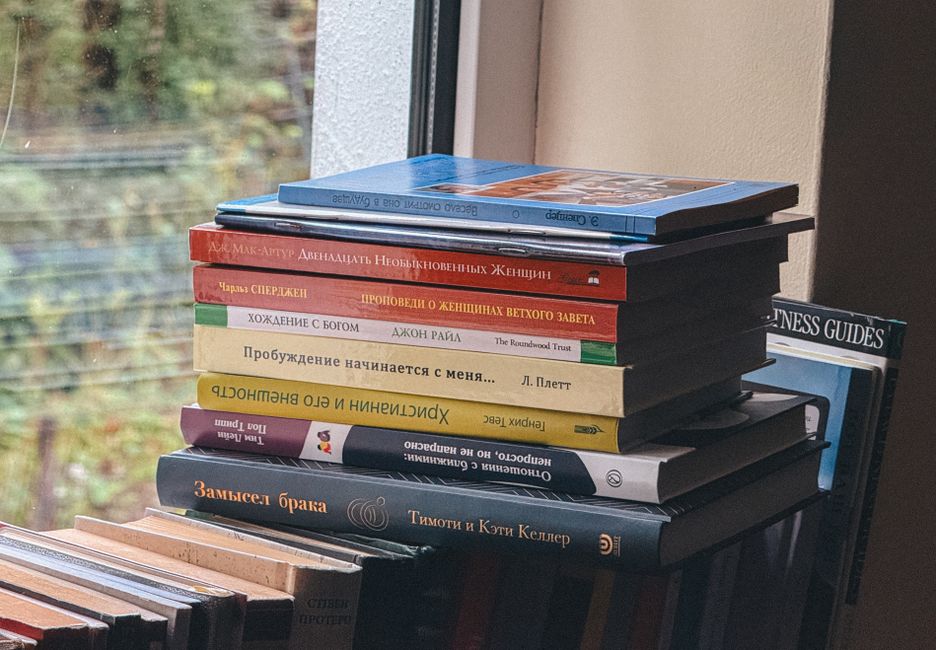
If you're publishing a book in more than one language, you've got a real puzzle on your hands. Multilingual book composition services handle the technical and editorial heavy lifting so your content looks professional and reads naturally in every language you're targeting.
Think of composition as the bridge between your finished manuscript and a publishable book. It's not just translation. It's typesetting, layout, character encoding, font selection, and formatting tailored specifically for each language's unique demands.
What Exactly Are Multilingual Book Composition Services?
Multilingual book composition services combine typesetting, layout design, and editorial preparation across multiple languages in one coordinated workflow. Your book doesn't just get translated; it gets professionally prepared for publication in every target market simultaneously.
Here's what's typically included:
- Professional typesetting - adjusting fonts, spacing, and line breaks so each language flows naturally on the page
- Layout composition - handling page breaks, headers, footers, and visual elements across all language versions
- Character encoding and fonts - ensuring scripts like Arabic, Chinese, Cyrillic, or right-to-left languages render correctly
- Copyediting and proofreading - catching grammar, consistency, and style issues in each language version
- eBook conversion - preparing multilingual files for Kindle, ePub, and other digital formats
- Index and reference preparation - organizing back matter so it's searchable and navigable in every language
The key difference from basic translation services is that composition providers understand publishing production. They don't just convert words; they ensure your book meets professional publishing standards across every language version.
Why Your International Book Needs Composition Services
Publishing a book in multiple languages sounds straightforward until you actually try it. Languages have wildly different requirements.
English flows left to right. Arabic flows right to left. Chinese characters take up different space than Latin letters. A sentence that fits perfectly in English might need three more lines in German. Quotation marks, punctuation rules, and hyphenation all vary by language and region.
If you try to use the same layout for every language version, you'll end up with awkward formatting, broken text, or worse - content that looks unprofessional to native speakers in that market. That damages credibility when you're trying to reach international readers.
Professional multilingual composition services account for all these variables. A specialized provider ensures that whether someone reads your book in English, Spanish, Mandarin, or Japanese, the experience feels intentional and polished.
The Core Components of Multilingual Composition
When you work with a composition service, several things happen in parallel:
Manuscript Preparation
Your original files get standardized and cleaned up. This means consistent formatting, resolved font issues, and a clear structure before composition even begins. If your manuscript is a mess of different styles and formatting, composition will take twice as long.
Language-Specific Typesetting
Each language gets typeset according to its own rules and conventions. This isn't automated - it requires human expertise. A typesetter working in Japanese needs to understand Japanese spacing rules, line-breaking conventions, and font rendering. The same goes for Arabic, Korean, Hindi, or any language outside the Latin alphabet.
Visual Consistency Across Versions
Your book should feel like the same book in every language, even though the text length and layout will be different. Composition services maintain design consistency - the same color schemes, image placement logic, and visual hierarchy across all versions.
Quality Control and Proofreading
Native speakers review each language version. This catches not just typos but cultural issues, tone problems, and inconsistencies. Xcel Graphic Services includes this stage because a perfectly typeset book with translation errors still fails your readers.

Digital Format Optimization
If your book is going digital, composition extends to eBook conversion. Multilingual eBooks are tricky - different devices handle character encoding differently, and your reflowable text needs to work across devices in every language.
Who Needs Multilingual Book Composition Services?
You're the ideal candidate if any of this sounds familiar:
- You're an author or publisher releasing the same book in 2+ languages
- Your audience spans international markets and you want professional appeal in each one
- You're tired of translation services that don't understand publishing workflows
- Your current approach creates separate, inconsistent versions of the same book
- You want simultaneous or near-simultaneous multilingual launches
- Your book includes scripts or languages that need specialized handling (right-to-left text, complex scripts, tone marks)
Academic publishers, international corporations releasing employee handbooks, global nonprofits, and indie authors with international reach all use these services.
How to Choose a Multilingual Composition Partner

Not all composition services are equipped for multilingual work. Here's what matters:
Language Coverage
Do they actually handle the languages you need? Some providers specialize in European languages. Others handle Asian scripts, Arabic, or less-common languages. Check their actual experience, not just their website claims.
Publishing Industry Knowledge
Composition isn't the same as translation. Your partner needs to understand publishing workflows, eBook standards, and professional book production. Translation services and composition services are different skill sets.
Turnaround and Scalability
Can they handle your timeline? If you're launching 5 language versions at once, you need a provider with enough staff to work on multiple languages in parallel, not sequentially. A provider like Xcel Graphic Services that coordinates typesetting, editing, and formatting in one workflow moves faster than juggling separate vendors.
Quality Assurance Process
Ask about their proofreading and quality control. Who's checking the work? Are they native speakers? What's their error-catching process before delivery?
File Delivery and Support
What format do you get back? Print-ready PDFs? eBook files? Editable source files? And if you need revisions, how easy is it to make changes without redoing the entire composition?
The Technical Side of Multilingual Composition
Behind the scenes, there's real technical complexity that separates amateur from professional composition services.
Font and Encoding Management
Your fonts need to support every language you're using. Not every font includes every character. A typesetter needs to either find or license multilingual fonts, then configure them correctly so characters render without corruption. Unicode encoding, font subsetting, and character mapping all matter.
Page Layout Variables
Languages expand and contract unpredictably. German typically needs 20-30% more space than English. Japanese, with its compact character system, often needs less. A professional composition service builds flexible layouts that accommodate these variations without looking like an afterthought.
Cultural Adaptation Beyond Translation
This goes beyond words. Image captions, headers, footnotes, and page numbers all need adjustment. Xcel Graphic Services approaches this as a publishing problem, not just a translation problem - meaning the book actually works as a book in every language, not just word-for-word conversion.
eBook and Digital Rendering
Print composition and digital composition have different constraints. eBooks reflow text based on device size, which means your carefully laid-out pages become flexible text flows. Multilingual eBooks add another layer - some devices don't render certain scripts consistently. A competent composition service tests across devices and platforms.
What to Expect in the Timeline
Multilingual composition takes longer than single-language typesetting, and that's normal.
A straightforward project might run 4-8 weeks depending on book length, number of languages, and complexity. Books with heavy formatting, images, or complex scripts (like academic work with citations in multiple languages) can take 8-12 weeks.
The timeline accounts for:
- Initial manuscript review and standardization (1-2 weeks)
- Parallel composition work on each language (4-6 weeks, depending on how many languages)
- Proofreading and native-speaker review (1-2 weeks per language)
- Revision rounds and final delivery (1-2 weeks)
Rushing this process creates problems. Composition errors caught after publication are expensive to fix, especially across multiple language versions. Professional timing is worth it.
eBook Conversion for Multilingual Books
If your book is going digital, composition services should handle eBook conversion as part of the workflow. This isn't afterthought work.
Multilingual eBooks need to handle:
- Reflowable text that works in every language across different device sizes
- Character encoding that doesn't corrupt when moved between platforms
- Hyphenation rules that respect language-specific word-breaking conventions
- Right-to-left text rendering for Arabic, Hebrew, and other RTL languages
- Navigation and table of contents that work across all language versions
A composition service that includes eBook conversion ensures your digital versions work as smoothly as your print versions. You're not getting an afterthought conversion; you're getting a file built specifically for digital reading in every language.
Common Challenges in Multilingual Composition

Understanding the gotchas helps you communicate better with your composition partner.
Inconsistent Source Files
If your English version has messy formatting, formatting varies throughout, or uses outdated software, composition takes longer. Clean files mean faster turnaround. Spend time on manuscript prep upfront.
Unclear Brand Guidelines
If you don't clarify how you want things styled - fonts, spacing, color usage, caption placement - your provider has to make assumptions. Get detailed style guidelines in place before composition starts.
Language-Specific Proofreading Delays
If you're waiting for native speakers to review proofs and feedback is slow, the whole timeline slips. Have your review people lined up before work begins.
Character and Script Issues
Some languages are harder than others. Chinese characters, Arabic ligatures, or tone marks in Vietnamese all require specific handling. Make sure your provider has handled your specific language combinations before.
Getting Started With Multilingual Book Composition
Here's the practical first step: prepare a detailed project brief that includes your source language, target languages, book type (fiction, academic, business), expected page count, timeline, and any special requirements.
Have sample pages of your current manuscript ready. A composition service can give you a realistic estimate and timeline once they see what they're working with. The more specific you are upfront, the more accurate their quote and timeline will be.
When evaluating providers, ask for examples of multilingual work they've actually completed. Ask about their process for quality control. Ask how they handle revisions and whether changes are easy to make after initial composition.
Related: APA Book Citation Format: Complete Guide & Examples
Related: What Does a Book Editor Do? Complete Guide
Related: Common Book Sizes: A Complete Guide for Publishers
Related: What Is Professional Book Typesetting? Complete Guide
Related: Book Layout: A Complete Guide to Professional Design
Related: Book Formatting: A Complete Guide to Professional Layout
Related: What Professional Book Editors Do: A Complete Guide
If you're serious about reaching international readers, multilingual composition services aren't a luxury - they're what separates a book that looks hastily translated from a book that was intentionally designed for every language it appears in. The investment in professional composition pays for itself through credibility and reader experience.
Key Takeaways for Your Project
Multilingual book composition is typesetting, layout, and editing coordinated across multiple languages so your book reads professionally in every market. It's not translation; it's publishing production that accounts for language-specific formatting needs, character encoding, and cultural context.
The right partner understands publishing workflows, has experience with your specific languages, and includes quality control from native speakers. Timeline and cost depend on book length, number of languages, and complexity, but the upfront investment in professional composition prevents costly problems after publication.
Your book deserves to feel professionally published in every language. That's what multilingual composition delivers.
People Also Ask
How is multilingual composition different from translation?
Translation converts words from one language to another. Composition handles the entire publishing production process - typesetting, layout, formatting, proofreading, and digital conversion - tailored for each language. A professional composition service manages the whole workflow, not just language conversion. That's why manuscripts need composition even after translation is done.
Can I use the same layout for every language version of my book?
Not effectively. Languages take up different amounts of space, have different punctuation rules, and require different fonts. A layout designed for English will look broken in German (which typically needs more space) or Chinese (which needs less). Professional composition redesigns the layout for each language so it looks intentional and polished in every version.
What scripts or languages are hardest to compose?
Right-to-left languages like Arabic and Hebrew, complex scripts like Devanagari or Thai, and languages with tone marks like Vietnamese require specialized knowledge and fonts. East Asian languages (Chinese, Japanese, Korean) need specific typesetting rules for character spacing and line-breaking. Make sure your composition provider has direct experience with your target languages before hiring them.
How long does multilingual book composition usually take?
A typical project runs 4-12 weeks depending on book length, number of languages, and complexity. This timeline includes manuscript prep, parallel composition work, native-speaker proofreading, and revisions. Rushing composition creates errors that are expensive to fix after publication, so realistic timelines matter.
Frequently Asked Questions
How is multilingual composition different from translation?
Translation converts words from one language to another. Composition handles the entire publishing production process - typesetting, layout, formatting, proofreading, and digital conversion - tailored for each language. A professional composition service manages the whole workflow, not just language conversion. That's why manuscripts need composition even after translation is done.
Can I use the same layout for every language version of my book?
Not effectively. Languages take up different amounts of space, have different punctuation rules, and require different fonts. A layout designed for English will look broken in German (which typically needs more space) or Chinese (which needs less). Professional composition redesigns the layout for each language so it looks intentional and polished in every version.
What scripts or languages are hardest to compose?
Right-to-left languages like Arabic and Hebrew, complex scripts like Devanagari or Thai, and languages with tone marks like Vietnamese require specialized knowledge and fonts. East Asian languages (Chinese, Japanese, Korean) need specific typesetting rules for character spacing and line-breaking. Make sure your composition provider has direct experience with your target languages before hiring them.
How long does multilingual book composition usually take?
A typical project runs 4-12 weeks depending on book length, number of languages, and complexity. This timeline includes manuscript prep, parallel composition work, native-speaker proofreading, and revisions. Rushing composition creates errors that are expensive to fix after publication, so realistic timelines matter.