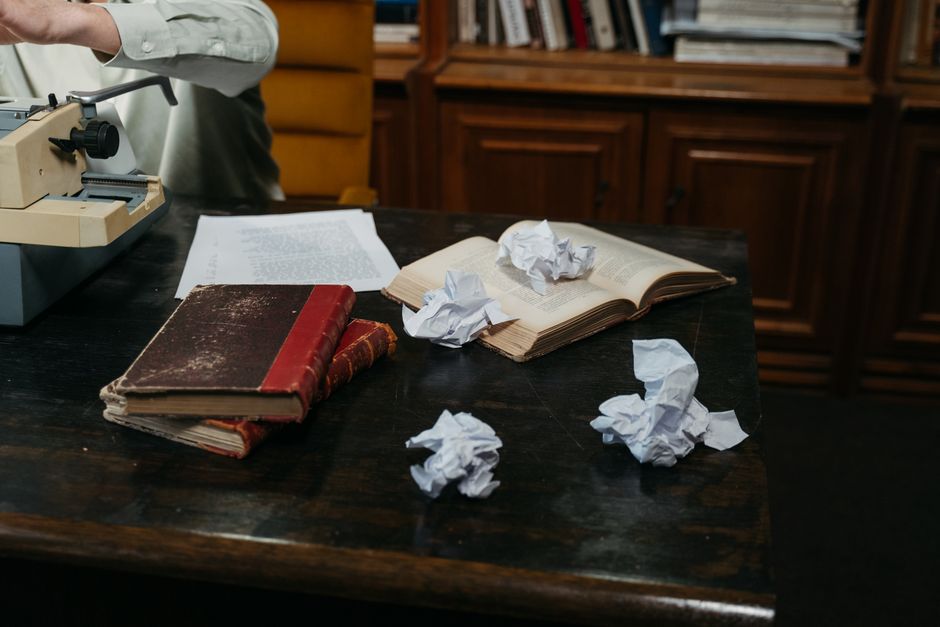
An online book editor is a professional who reviews, refines, and polishes your manuscript using digital tools and remote communication. They catch errors, improve clarity, strengthen your narrative, and prepare your work for publication—all without meeting you in person.
If you're writing a novel, memoir, non-fiction book, or academic paper, an online editor works with you to elevate your manuscript before it reaches readers. They handle everything from grammar and structure to flow and consistency, using track changes so you can see exactly what they've modified.
How Online Book Editors Actually Work
The process is straightforward. You upload your manuscript to a platform or send it via email. The editor reviews it on their end, marks up changes using standard track-changes features, and sends it back to you with detailed notes.
Related: What Professional Book Editors Do: A Complete Guide
Related: What Does a Book Editor Do? Complete Guide
You're always in control. Every suggestion appears as a tracked change, so you decide whether to accept, reject, or modify each edit. The editor usually includes a summary letter explaining the big-picture issues and how they approached the work.
Unlike self-editing tools that rely on automation, a real online book editor brings human expertise. They understand story structure, genre conventions, reader expectations, and the subtle ways words affect your message. This is especially valuable if you're preparing a manuscript for submission to agents or publishers, or if you're self-publishing and want professional-grade quality.
Types of Editing You'll Encounter
Not all editing is the same. Understanding the different levels helps you know what you're paying for.
Developmental editing focuses on big-picture issues: plot structure, character arcs, pacing, and whether your manuscript accomplishes what you intended. This is heavy editorial work and usually happens early in the revision process.
Line editing zooms in on how you've written each sentence. An editor improves clarity, removes redundancy, strengthens weak phrasing, and enhances readability without changing your voice.
Copyediting catches grammar, punctuation, spelling, and consistency errors. It's detail-focused work that ensures your manuscript follows style guidelines and reads smoothly.
Proofreading is the final sweep before publication, catching typos and formatting inconsistencies that slipped through earlier rounds.
Many authors hire an editor for one level, then another for a different layer. Some online editors offer a combination—for example, Xcel Graphic Services provides copyediting and proofreading alongside typesetting and eBook conversion, so your manuscript gets polished at every stage of production.

When You Should Hire an Online Book Editor
You don't need an editor for every writing project. But if your goal is publication—whether with a traditional publisher, a hybrid press, or as an independent author—professional editing makes a real difference.
Hire an editor if:
- You're querying agents or submitting to publishers (they expect polished manuscripts)
- You're self-publishing and want to compete on quality with traditionally published books
- You're writing in a genre with specific conventions (romance, science fiction, mystery) that require editorial expertise
- English isn't your first language and you want native-speaker refinement
- Your manuscript is long or complex and needs structural guidance
- You've been rejected before and want fresh eyes on what might be holding you back
You probably don't need an editor for blog posts, journal entries, internal memos, or casual writing. But for a book project, the investment typically pays off in reader satisfaction and professional credibility.
Finding the Right Online Book Editor
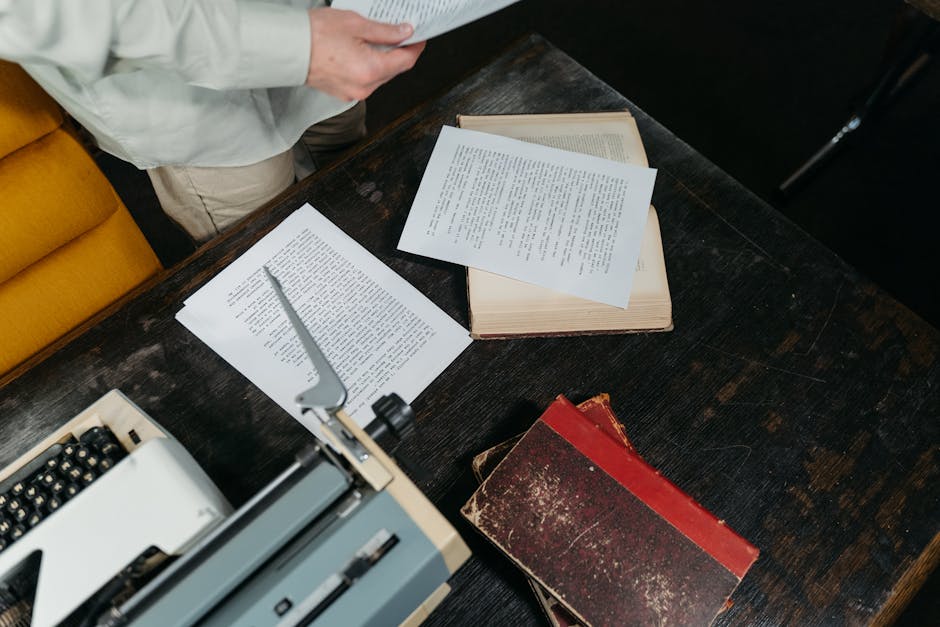
Quality varies widely. Here's what to look for.
Specialization matters. Some editors focus on fiction, others on memoirs, academic papers, or non-fiction. An editor who has worked extensively in your genre understands your readers' expectations and the conventions your work should follow.
Ask for samples and references. A professional editor should be happy to show you before-and-after examples of their work (with author permission) and provide contact info from past clients.
Check their process and turnaround. Does the editor explain how they work? Will they give you a realistic timeline? Do they offer a sample edit of the first few pages so you can see their style before committing?
Understand the pricing model. Some editors charge per word, others by the hour or per project. Longer manuscripts and heavier editorial work cost more, which is normal. When you're ready to explore options, Xcel Graphic Services can walk you through what your specific project would involve.
Trust your gut. You'll be working closely with this person on your creative work. Make sure their communication style feels right and that they seem genuinely interested in your book's success.
Online Editing vs. Self-Editing Tools
AI-powered editing platforms have improved a lot. They can scan your entire manuscript quickly, flag grammar issues, and suggest improvements in minutes. These tools are useful for catching obvious mistakes and giving you a fast overview.
But they have real limits. Automated editors can't understand your story's emotional impact, recognize plot holes, or know whether your voice fits your genre. They sometimes flag correct grammar as wrong, miss context-dependent errors, and can't provide the kind of strategic guidance that transforms a good manuscript into a great one.
The best approach? Use automated tools as a first pass to catch low-hanging fruit, then hire a human editor to handle the deeper work that only experience and judgment can deliver.
After Editing: What Comes Next
Once your manuscript is edited, you're not quite done. If you're self-publishing, you'll need typesetting (formatting the interior layout), eBook conversion (preparing files for digital platforms), and possibly indexing if your book is non-fiction.
If you're traditionally publishing, your publisher will handle these steps. But if you're indie publishing or working with a hybrid press, these production services make the difference between an amateur-looking self-published book and one that competes professionally on the shelf or online.
Xcel Graphic Services handles the full production pipeline after your manuscript is edited—typesetting, eBook formatting, indexing, and more—so you can focus on the writing and editing side without juggling a dozen vendors.
People Also Ask

How long does professional book editing take?
It depends on manuscript length, editing depth, and the editor's workload. A standard novel typically takes 2-6 weeks. Shorter projects or lighter copyediting rounds might finish in 1-2 weeks. Always ask your editor for a specific timeline before you hire them.
Can I edit my own book?
You can try, and many writers do a first pass on their own work. But self-editing is extremely difficult. You're too close to your material to see its flaws objectively, and you'll miss errors your brain automatically corrects. A professional editor catches what you've overlooked and provides the objective feedback every manuscript needs.
What's the difference between an editor and a proofreader?
Editors improve content, structure, and clarity before publication. Proofreaders catch typos and formatting errors at the very end, right before your book goes to print or digital platforms. You typically hire an editor first, then a proofreader last.
Do I need editing if I'm traditionally published?
Traditional publishers provide editorial services, but acquiring publishers sometimes want to see a polished manuscript before they offer a contract. If you're querying agents, a professional edit beforehand significantly strengthens your submission. After acceptance, your publisher's editorial team will do additional rounds.
Frequently Asked Questions
How long does professional book editing take?
It depends on manuscript length, editing depth, and the editor's workload. A standard novel typically takes 2-6 weeks. Shorter projects or lighter copyediting rounds might finish in 1-2 weeks. Always ask your editor for a specific timeline before you hire them.
Can I edit my own book?
You can try, and many writers do a first pass on their own work. But self-editing is extremely difficult. You're too close to your material to see its flaws objectively, and you'll miss errors your brain automatically corrects. A professional editor catches what you've overlooked and provides the objective feedback every manuscript needs.
What's the difference between an editor and a proofreader?
Editors improve content, structure, and clarity before publication. Proofreaders catch typos and formatting errors at the very end, right before your book goes to print or digital platforms. You typically hire an editor first, then a proofreader last.
Do I need editing if I'm traditionally published?
Traditional publishers provide editorial services, but acquiring publishers sometimes want to see a polished manuscript before they offer a contract. If you're querying agents, a professional edit beforehand significantly strengthens your submission. After acceptance, your publisher's editorial team will do additional rounds.