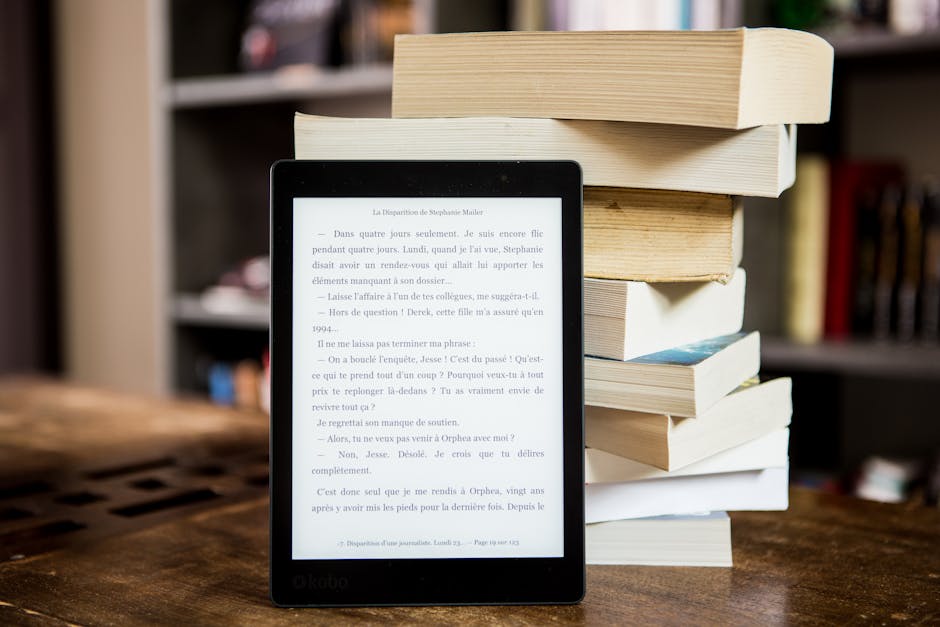

Converting a printed book into an eBook isn't just hitting 'save as PDF' and calling it done. There's actual technology, quality control, and platform compatibility involved. Here's what you need to know about print book to eBook conversion services and whether your project needs professional help.
What Is Print Book to eBook Conversion?
Print book to eBook conversion is the process of taking a physical, printed book and turning it into a digital file that works on Kindles, Kobo readers, Apple Books, and other platforms. Sounds simple. It's not.
Related: Best eBook Conversion from Word to ePub for Publishers
Your printed book is basically a frozen image. An eBook is a flexible, responsive document that reflows based on screen size and reader preferences. Converting between them requires more than just scanning pages.
Related: Print Book Formatting: A Step-by-Step Guide for Publishers
The Conversion Process: Step by Step
Here's how professional conversion actually works.
Step 1: Scanning
You have two scanning methods available. Non-destructive scanning uses a flatbed scanner or phone app to capture each page without damaging the book. Destructive scanning involves disassembling the book for a specialized book scanner that feeds pages through automatically.
Non-destructive is slower but keeps your original book intact. Destructive is faster and produces cleaner scans, but your physical copy gets torn apart. Choose based on whether you need to keep the original and your budget constraints.
Step 2: Optical Character Recognition (OCR)
Raw scans are just images. OCR technology converts those images into searchable, editable text that computers and eReaders can actually work with. Without OCR, your eBook would just be pictures of pages. Readers couldn't search, adjust font sizes, or navigate properly.
Step 3: Formatting and Structure
Text alone isn't enough. The conversion service needs to rebuild your book's structure: chapters, headings, paragraphs, page breaks. They add metadata (title, author, ISBN) and ensure the file is organized in a way that eReaders understand.
Step 4: Proofreading and Quality Assurance
OCR makes mistakes. A period might become a zero. A lowercase 'l' might become the number 1. Professional conversion services include spell-checking and proofreading to catch these errors before the eBook goes live.
Related: Book Typesetting Services for Publishers: What You Need to Know
Step 5: Format Output
Your final file gets exported into multiple formats. EPUB works on most devices and open-source platforms. MOBI is for older Kindles. KF8 is for newer Kindles. Some retailers want specific formats. Professional converters deliver all the versions your book needs.
Why You Might Need Professional Help
DIY conversion is theoretically possible if you have basic tech skills. Scan, run OCR software, export, upload. But here's what usually goes wrong:
- OCR quality suffers on books with unusual fonts, colored backgrounds, or dense layouts
- Formatting falls apart, especially with complex chapter openings or images
- Metadata gets bungled, hurting discoverability on retail platforms
- Files aren't tested across all major eReader devices before launch
- Your book launches with obvious errors that damage your author reputation
If your book has illustrations, multiple columns, sidebars, or a sophisticated design, professional conversion becomes nearly essential. Xcel Graphic Services specializes in handling exactly these complex layouts and ensuring your eBook renders correctly across every major platform.
Understanding eBook Formats and Device Compatibility
Not all eBook formats work everywhere. Understanding the landscape saves you headaches.
EPUB is the open standard. It works on Kobo, Apple Books, Google Play Books, and most indie retailers. This is your safest bet for broad compatibility.
MOBI and KF8 are Amazon-specific formats. If you're selling on Kindle, you need one of these. KF8 (Kindle Format 8) is the newer standard and supports better formatting, but many Kindle devices still use MOBI.
PDF technically works as an eBook, but it doesn't reflow. Text stays locked to page dimensions. Readers have to pinch and zoom to read on phones. Avoid PDF unless you're distributing only to desktop readers or have specific design reasons.
Professional conversion services deliver files compatible with all major platforms, so readers can buy your book wherever they shop and it will display correctly.
Scanning Quality Matters More Than You Think
The quality of your initial scan determines the quality of your final eBook.
A blurry scan with shadows, crooked pages, or missing margins creates extra work for OCR software. It makes more mistakes. Your proofreader has to work harder. Errors slip through more easily.
Professional book scanners are specifically designed to capture text cleanly and consistently. They adjust for page curvature, control lighting, and auto-straighten. A phone app can work in a pinch for small projects, but specialized equipment produces noticeably better results.
This is why destructive scanning sometimes makes sense for high-value projects. The specialized scanner's clean captures offset the cost and hassle of disassembling the book.
Cost Considerations
Conversion pricing depends on book length, complexity, scanning method, and turnaround time. Pricing is based on your specific project, not a universal rate.
Simple novels with straightforward text are cheaper to convert than illustrated children's books or academic texts with footnotes, cross-references, and complex tables.
If you're considering whether DIY makes financial sense, factor in your time. If you're scanning manually with a phone and then fixing OCR errors yourself, you might spend 20-40 hours on a 300-page book. Whether that's worth it depends on what your time is worth to you.
What to Look for in a Conversion Service
If you decide to outsource, here are the non-negotiable features:
- Testing across multiple device types (Kindle, iPad, Kobo, phone) before delivery
- Spell-check and proofreading included, not add-ons
- Delivery in multiple formats (EPUB, MOBI, KF8) to cover all major retailers
- Clear communication about turnaround time
- Revision rounds included if files don't meet your standards
You want a partner who treats your eBook as a finished product, not just a file conversion. Xcel Graphic Services includes quality assurance testing and proofreading as standard, ensuring your digital book matches the quality of your print edition.
When DIY Actually Works
Be honest with yourself about your book's complexity.
DIY conversion is genuinely viable for straightforward novels with no images, consistent formatting, and standard fonts. Simple text-only projects benefit less from professional services because there's less that can go wrong.
You still need OCR software and a basic understanding of eBook file structure, but the learning curve is manageable. Free OCR tools exist online. Self-publishing platforms like Draft2Digital offer free conversion and distribution to multiple retailers without upfront costs.
The trade-off: you handle quality control yourself, and if errors slip through, they affect readers' experience with your book.
The Real Timeline Question

How long does conversion take? Non-destructive scanning might take days or weeks depending on book length and scanner availability. Destructive scanning is faster but requires a specialized facility.
Once scanned, OCR is relatively quick. Formatting and proofreading take the most time, especially if multiple rounds of revision are needed.
Total timeline for professional conversion typically ranges from one week for simple projects to several weeks for complex books. Plan accordingly if you have a launch deadline.
Metadata and Discoverability
Here's something DIY converters often overlook: proper metadata is critical for selling eBooks.
Your eBook needs an ISBN (if you want broad retailer distribution), accurate title and author fields, a category classification, keywords, and a description. When these fields are wrong or missing, your book becomes invisible in search results.
Professional conversion services ensure metadata is clean and complete, improving your book's visibility on retail platforms. This directly affects sales, even if readers never notice the backend work.
Related: Textbook to LMS Conversion for Publishers: A Complete Guide
Related: EPUB Conversion Services for Academic Publishers: A Complete Guide
Platform-Specific Requirements
Amazon's Kindle platform has specific file requirements and guidelines. Smashwords has different ones. Apple Books has yet another set.
Uploading the wrong file format or failing to meet platform specifications means your book gets rejected or displays incorrectly. Professional services know these requirements for every major platform and format your files accordingly.
If you're planning to distribute through multiple retailers, this knowledge saves you rejection cycles and delayed launches.
After Conversion: Testing and Launch
Before you publish, download your eBook to at least three different devices: a Kindle, a phone, and a tablet if possible. Check that text displays correctly, images are positioned properly, chapter breaks work, and table of contents navigation functions.
Small formatting issues that look fine on a desktop might become glaring problems on a 6-inch screen. Catching these before launch is way better than fixing them after readers have already downloaded the broken version.
This is standard procedure when working with professional services. They test your files across multiple devices before delivery, so you launch with confidence.
Making Your Decision
Ask yourself three questions:
- Is your book simple text-only, or does it have images, tables, or complex formatting?
- Do you have time to learn OCR software and eBook file structure?
- Is your book's success dependent on flawless presentation?
If your book is simple and you have time, DIY might work. If your book is complex, your time is valuable, or you're launching a professional project, professional conversion is the smarter investment. Your book deserves to look as good digitally as it does in print.
Can I convert a print book to eBook myself?
Yes, but it requires scanning equipment, OCR software, and technical knowledge. Non-destructive scanning with a flatbed scanner or phone app takes patience. OCR conversion is straightforward with free tools, but fixing OCR errors, rebuilding formatting, and testing across devices is time-consuming. Simple novels are easier; books with images, tables, or complex layouts are significantly harder. DIY is viable for straightforward projects where you have several weeks and don't mind troubleshooting.
What file format should my eBook be?
EPUB is the universal standard and works on most devices and retailers. MOBI and KF8 are required for Amazon Kindle. PDF technically works as an eBook but doesn't reflow and is frustrating to read on small screens. If you're publishing through multiple retailers, you need both EPUB and a Kindle-specific format (usually KF8). Professional conversion services deliver all formats your book needs.
How long does print to eBook conversion take?
Scanning takes days to weeks depending on book length and method. OCR conversion happens quickly, but formatting, proofreading, and testing add time. Typical professional conversion takes one to three weeks, depending on book complexity and revision needs. Simple novels are faster; illustrated books or academic texts take longer. Turnaround time also depends on the service's current workload.
Will my eBook look the same as my printed book?
No, and that's intentional. eBooks reflow to fit any screen size. Readers adjust font size. Layout is flexible. This means your eBook won't be a pixel-perfect copy of the print edition, but that's fine. It's designed to be readable on phones, tablets, and eReaders. Professional conversion services maintain your book's structure, hierarchy, and design intent while adapting it for digital flexibility.
Frequently Asked Questions
Can I convert a print book to eBook myself?
Yes, but it requires scanning equipment, OCR software, and technical knowledge. Non-destructive scanning with a flatbed scanner or phone app takes patience. OCR conversion is straightforward with free tools, but fixing OCR errors, rebuilding formatting, and testing across devices is time-consuming. Simple novels are easier; books with images, tables, or complex layouts are significantly harder. DIY is viable for straightforward projects where you have several weeks and don't mind troubleshooting.
What file format should my eBook be?
EPUB is the universal standard and works on most devices and retailers. MOBI and KF8 are required for Amazon Kindle. PDF technically works as an eBook but doesn't reflow and is frustrating to read on small screens. If you're publishing through multiple retailers, you need both EPUB and a Kindle-specific format (usually KF8). Professional conversion services deliver all formats your book needs.
How long does print to eBook conversion take?
Scanning takes days to weeks depending on book length and method. OCR conversion happens quickly, but formatting, proofreading, and testing add time. Typical professional conversion takes one to three weeks, depending on book complexity and revision needs. Simple novels are faster; illustrated books or academic texts take longer. Turnaround time also depends on the service's current workload.
Will my eBook look the same as my printed book?
No, and that's intentional. eBooks reflow to fit any screen size. Readers adjust font size. Layout is flexible. This means your eBook won't be a pixel-perfect copy of the print edition, but that's fine. It's designed to be readable on phones, tablets, and eReaders. Professional conversion services maintain your book's structure, hierarchy, and design intent while adapting it for digital flexibility.