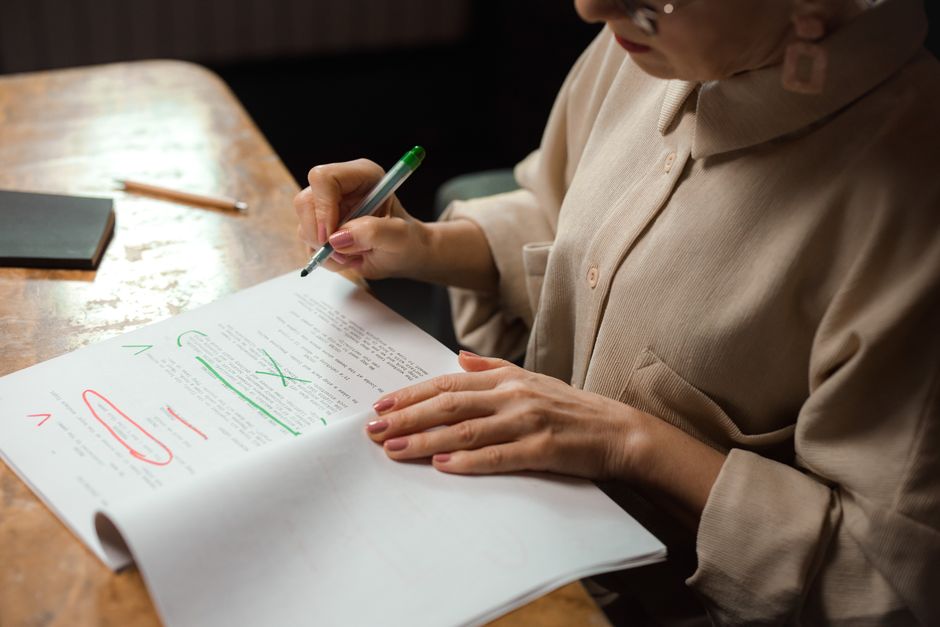
If you work in publishing, you already know that one typo or grammar mistake can tank your credibility. Copyediting and proofreading for publishers are two distinct services that work together to catch errors before a book, journal, or digital publication hits readers’ eyes.
But what’s the real difference? And more importantly, how do you hire the right person to handle this work? Let’s break it down.
What’s the Difference Between Copyediting and Proofreading?
Here’s the honest truth: a lot of people use these terms interchangeably, but they’re actually different jobs.
Copyediting happens earlier in the publishing process. A copyeditor reads your manuscript and fixes spelling, grammar, punctuation, and syntax errors. They also check that your style is consistent throughout the document, improve readability, and flag awkward phrasing. Think of them as the person who makes sure your words are clear, professional, and correct.
Proofreading comes later—usually after the manuscript has been typeset or formatted. A proofreader’s job is narrower: they’re catching typos, spacing issues, and other mistakes that slipped through earlier rounds. They’re the final safety net before your book goes live.
The practical difference matters because Xcel Graphic Services and similar publishing services often handle both, but they require different expertise and timing.
The Core Skills Every Publisher Needs from Their Copyeditor
When you’re hiring someone to handle copyediting and proofreading for publishers, you need to know what skills actually matter.
First: grammar and punctuation mastery. This sounds basic, but you’d be surprised how many people claim expertise without really knowing the Chicago Manual of Style or AP style inside and out. Style guides aren’t optional—they’re the rulebook every publisher lives by.
Related: Book Indexing Back-of-Book Formatting: The Complete Guide
Related: Standard Book Sizes: Complete Guide for Publishers & Authors
Second: attention to detail that borders on obsessive. Copyeditors and proofreaders need to spot a misplaced comma three pages after they last flagged an error. Fatigue is the enemy.
Third: proficiency with editing tools. Microsoft Word’s track changes feature is the bare minimum. Many editors also use Grammarly, specialized editing software, or Adobe InDesign depending on the project stage. Your copyeditor should be comfortable with whatever workflow you use.
Fourth: deadline reliability. Publishers operate on tight schedules. Missing a deadline cascades through production, design, marketing, and distribution. A good copyeditor treats deadlines like they’re written in stone.
Fifth: the ability to understand context and tone. This is where AI tools start to fall short. An AI grammar checker can flag a sentence fragment, but a human editor knows when breaking grammar rules actually strengthens your voice.
How Publishers Actually Hire Copyeditors and Proofreaders
Most publishers don’t post job ads on general job boards. Instead, they work through production editors and acquisitions teams who have existing relationships with freelance copyeditors.
Referrals dominate this industry. If one editor does great work and delivers on time, the publisher will call them for the next project. Word travels fast in publishing circles.
That said, building a solid reputation takes time. New editors often start by pitching themselves to smaller publishers, academic journals, or self-published authors. Each successful project becomes a portfolio piece and a potential reference.
If you’re a publisher looking to build a reliable team, Xcel Graphic Services gives you a vetted partner instead of managing a rotating cast of freelancers. That’s worth the investment if consistency matters to your brand.
Why AI Alone Won’t Cut It (Yet)

Let’s be clear: AI tools are incredible at catching grammar and spelling mistakes. Grammarly, for example, will flag hundreds of corrections in seconds. But there’s a massive gap between finding errors and understanding whether a change actually improves the writing.
Consider this example: “She walked into the room. The silence was deafening.” That’s technically a cliche and grammatically awkward. But if it’s intentional for voice or character, changing it removes the author’s style. An AI tool doesn’t know context. A human copyeditor does.
AI also struggles with industry-specific terminology, brand voice consistency, and nuanced tone decisions. A publisher releasing a serious business book needs different editing than one publishing a humorous memoir.
The smart approach? Use AI as a first pass to catch obvious errors, then have a human copyeditor do the real work. That’s when copyediting and proofreading for publishers becomes truly effective.
The Market Demand for Quality Copyediting and Proofreading
Work-from-home copyediting remains in strong demand across 2026. Publishers, eLearning companies, academic journals, and content-heavy organizations all need people who can deliver clean, error-free work quickly.
For publishers, outsourcing copyediting and proofreading reduces production time and internal workload without sacrificing quality. It’s one of the smartest investments you can make in your publishing pipeline.
Building Your In-House Copyediting Process
If you’re managing multiple titles per year, you need a consistent process. Here’s what works:
- Assign a production editor who coordinates all editorial feedback and schedules.
- Send manuscripts to your copyeditor with clear style guidelines and brand voice documentation.
- Build in 2-3 weeks for copyediting, depending on manuscript length.
- Have the author review copyeditor comments and accept/reject changes.
- Send the revised manuscript to proofreading at least 1-2 weeks before publication.
- Do a final quality check in your production software before the book goes live.
This workflow sounds simple, but it prevents the chaos that happens when you skip steps or rush timelines. That’s where publishers often lose money—not from hiring copyeditors, but from fixing errors after publication.
When you need a partner who understands this entire process and handles the execution, Xcel Graphic Services specializes in exactly this kind of production oversight, freeing you to focus on acquisitions and author relationships.
What Makes Fast and Accurate Copyediting Possible

Speed and accuracy sound like they should conflict, but they don’t. Here’s how good editors manage both:
They specialize. An editor who works exclusively on memoirs becomes faster and more accurate than a generalist. They know the common pitfalls specific to that genre.
They batch similar projects. This reduces the mental switching costs of moving from a children’s book to a technical manual to a novel.
They use templates and checklists. A copyeditor working on the 50th business book has a mental checklist of what to watch for. That efficiency translates to faster turnaround without quality loss.
They understand their tools inside out. Someone who’s been using Word’s track changes for five years works much faster than someone using it for the first time.
And honestly, they care. The best copyeditors take pride in their work. That attitude naturally translates to speed and accuracy because they’re motivated to get it right.
Real Talk: The Cost of Skipping Professional Copyediting and Proofreading
Some publishers think they can skip these steps or rush them to save money. That usually backfires.
One grammar error in your first chapter can make readers question the entire book. A misspelled author name in the jacket copy is embarrassing. Inconsistent style across chapters makes your publication feel amateurish, even if the content is solid.
Fixing these errors after publication is expensive—reprinting, digital file updates, marketing damage control. The cost of fixing problems almost always exceeds the cost of doing it right the first time.
This is why Xcel Graphic Services and professional copyediting services exist. They’re not a luxury for high-end publishers. They’re a practical business decision that protects your reputation and bottom line.
How to Evaluate a Copyeditor’s Work
Not all copyeditors are equal. Here’s how to spot good work:
- They flag issues, not just fix them. Good editors explain why a change matters so you understand the decision.
- They respect your voice. They improve clarity without rewriting everything to sound like them.
- They’re consistent. Same issues get the same treatment throughout the manuscript.
- They meet deadlines. Every time. No excuses.
- They ask clarifying questions. If your style guide is unclear or conflicting, they ask rather than guessing.
When you review a copyedited manuscript, look at the ratio of comments to changes. Some copyeditors over-edit. Others under-edit. You want someone who makes meaningful changes without meddling.
Copyediting and Proofreading Across Different Publishing Formats
The format matters more than you might think. A copyeditor working on a print book needs to understand typesetting constraints. Someone handling eBook files needs to know eBook conversion requirements and how formatting affects different devices.
Academic journals have different standards than trade publishing. Legal documents require different precision than literary fiction. A good copyeditor either specializes in your format or takes time to understand it before starting work.
This is why one-size-fits-all editing services often underperform. Your copyeditor should know your industry, your audience, and your format requirements inside out.
How long does copyediting usually take?
That depends on manuscript length, complexity, and how heavy the editing needs to be. A 60,000-word novel might take 3-4 weeks. A highly technical 40,000-word manual could take 5-6 weeks because every sentence requires careful attention. Most experienced copyeditors can handle roughly 10,000-15,000 words per week, though that varies.
Can copyediting and proofreading be done by the same person?
Technically yes, but it’s not ideal. A copyeditor who already spent weeks on a manuscript might miss typos because they’re too familiar with the text. Fresh eyes catch what tired eyes miss. If budget requires one person to do both, building in a break between the two rounds helps. The copyeditor finishes, steps away for a week, then comes back to proofread with a clearer head.
What style guide should I use?
Chicago Manual of Style dominates trade publishing and academic work. AP Style is standard for journalism and news-adjacent content. MLA and APA are common in academic and scientific publishing. Your copyeditor should be fluent in whichever you choose. If you’re unsure, ask your copyeditor what they recommend based on your content and audience.