
Large print books are a straightforward but often overlooked solution to a real problem: reading comfort. If you're publishing, editing, or producing books, understanding large print formats can open your work to millions of readers who might otherwise skip your title.
Here's the honest truth: large print isn't just for older adults. People with low vision, dyslexia, and other visual processing challenges depend on it. Plus, plenty of readers simply prefer larger text because it reduces eye strain after a long day. That's a market worth taking seriously.
Let's walk through what large print books actually are, why they matter, and how to produce them properly.
Related: Book Conventions: What They Are & How to Get the Most Out of Them
Related: Hand-Coded ePub Conversion Services: What They Are & When You Need Them
Related: Academic Journal Copyediting Services: What They Do & Why You Need Them
What Exactly Are Large Print Books?
Large print books use significantly larger font sizes than standard editions, typically ranging from 14 to 18 points (sometimes even larger). Compare that to a standard novel, which usually sits at 10-12 points, and you can see why the difference matters for someone straining to read.
But it's not just about bumping up the font size. Professional large print editions require careful attention to:
- Font choice (serif fonts are often easier to read at larger sizes)
- Line spacing to prevent text from feeling cramped
- Paper quality and color to reduce glare
- Page margins that give readers breathing room
- Durable bindings designed for library use and frequent handling
This is where the production gets detailed. You can't just enlarge a standard book file and call it done. The entire layout needs to be rethought, which is why professional typesetting matters so much in this space.
Who Actually Reads Large Print Books?
Your audience is broader than you might think.
The core readers include:
- Adults over 65 (vision naturally declines with age)
- People with low vision or age-related macular degeneration
- Readers with dyslexia or visual processing disorders
- Anyone recovering from eye surgery or injury
- Busy professionals who want less eye strain during leisure reading
Libraries maintain dedicated large print collections because demand is consistent and loyal. People who prefer large print tend to keep reading. That's good news if you're thinking about the long-term appeal of your publication.
How Large Print Books Get Produced
Creating a quality large print edition isn't a copy-paste job. It requires skilled typesetting that goes well beyond font resizing.
Here's the production workflow:
- Font selection: Typesetters choose fonts with generous character spacing and clear letterforms. A font that works fine at 11 points might look awkward at 16.
- Layout redesign: The entire page grid changes. Fewer words fit per page, which means more total pages. This affects paper costs, printing, and shipping.
- Line length adjustment: Shorter line lengths (around 40-50 characters) reduce eye fatigue. Wider margins support this naturally.
- Leading (line spacing): More space between lines becomes critical at larger sizes. It prevents text from running together visually.
- Chapter breaks and navigation: Clear chapter openings, larger heading hierarchies, and visible page numbers help readers orient themselves.
- Proofing for readability: Professional proofreading at large print sizes catches issues that wouldn't show up in standard layouts.
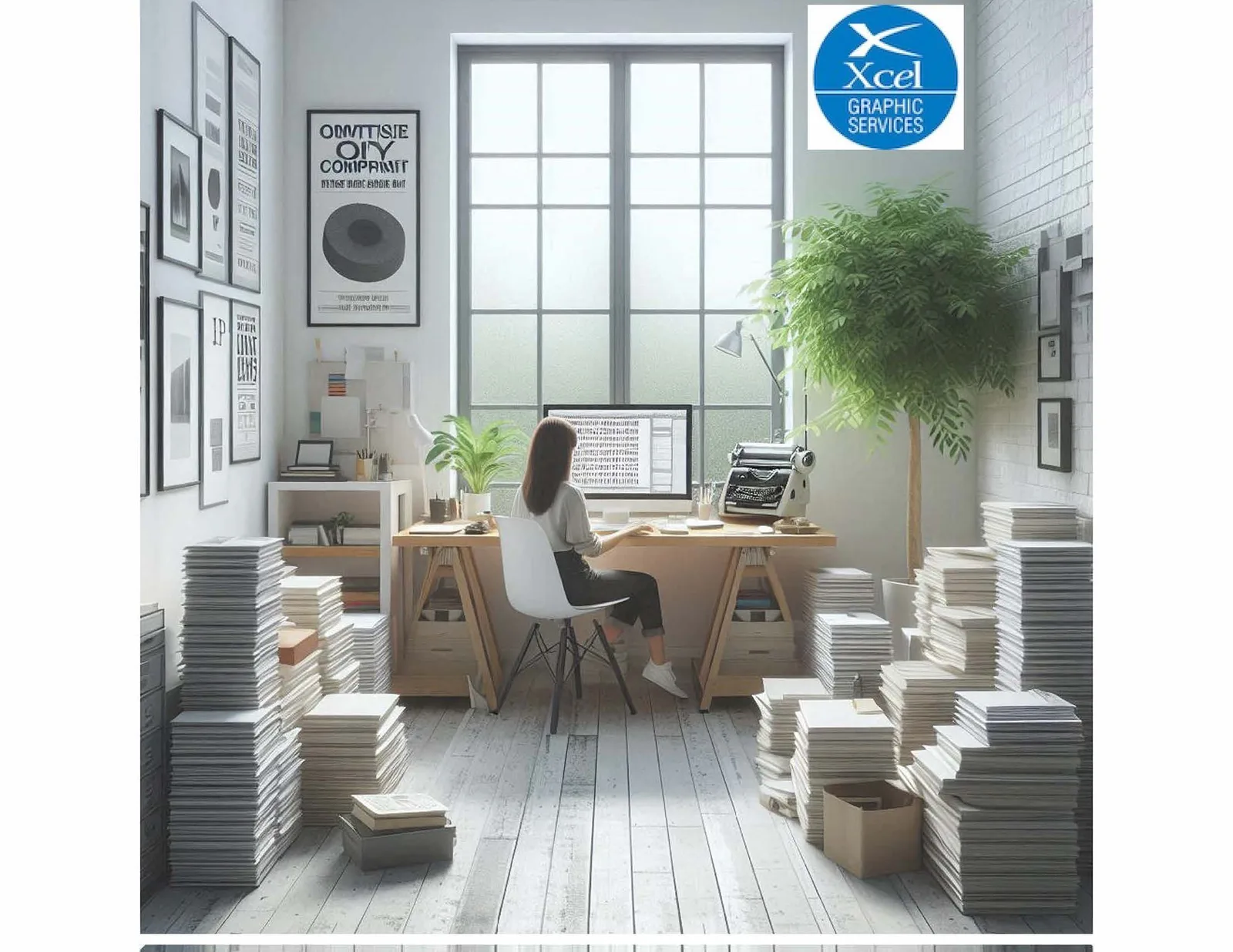
This is exactly the kind of specialized work that Xcel Graphic Services specializes in. Typesetting for accessibility isn't just a technical skill, it's a craft that requires understanding how readers actually interact with the page.
Font Size Guidelines for Large Print
There's no single "official" large print standard, but industry conventions give you a solid framework:
- 14 point: Entry-level large print. Works for readers with mild vision challenges. Still fits more text per page than smaller sizes.
- 16 point: The most common professional standard. Balances readability with reasonable page count.
- 18 point and above: Used for readers with more significant vision loss. Dramatically increases page count and production costs.
Your choice depends on your audience and budget. A mystery series targeting general readers might start at 16 point. A title specifically marketed to readers with low vision might go to 18 or beyond.
Paper and Binding Considerations
Large print editions often live harder lives than standard books. They're checked out from libraries repeatedly, read by multiple family members, and handled frequently by people with tremors or arthritis (which are common alongside vision issues).
That's why professional large print books typically feature:
- Heavier paper stock that resists wear and feels substantial
- Off-white or cream-colored paper to reduce glare compared to bright white
- Hardcover library bindings that withstand repeated circulation
- Reinforced stitching at the spine
These details cost more than standard trade paperback production, but they're non-negotiable for quality. A large print edition that falls apart after two dozen reads damages your reputation and wastes your investment.
Why Distribution Matters for Large Print
Once you've produced a solid large print edition, getting it into the right hands is half the battle.
The major distribution channels are:
- Library systems: Most public libraries maintain large print collections. They're often eager to acquire popular titles in this format.
- Specialty retailers: Some bookstores dedicate shelf space to large print, especially in areas with older populations.
- Online booksellers: Major platforms sell large print editions alongside standard editions. Separate SKUs and ISBN numbers help visibility.
- Direct-to-reader sales: Authors and publishers increasingly sell large print editions directly, especially for backlist titles.
The point: don't assume your large print edition will find its audience automatically. Market it specifically to librarians, recommend it to readers who mention vision challenges on social media, and make sure your online listings clearly identify the format.
The Copyediting and Proofreading Layer
Here's something many publishers skip but shouldn't: large print editions deserve fresh copyediting and careful proofreading.
Why? Because typography changes expose different errors. A typo that blended into a dense standard layout suddenly stands out at 16 points. Awkward line breaks occur in different places. Orphaned words land differently on the page.
When you work with professional typesetting and proofreading services, this catch happens systematically. The typesetters and proofers work together to ensure that what goes to print is genuinely readable, not just enlarged.
Cost Implications You Should Know
Large print production costs more than standard editions, and understanding where the expense comes from helps you budget realistically.
You're paying for:
- Increased page count (often 30-50% more pages for the same content)
- More paper and heavier stock
- Hardcover binding instead of paperback
- Professional typesetting from scratch (not a simple resize)
- Extended proofreading to catch visibility and layout issues
This means per-unit costs are higher. But if your audience values accessibility and you're serious about reaching libraries and readers with vision challenges, it's an investment that pays dividends through sustained sales and reader loyalty.
Starting Your Large Print Project
If you're ready to create a large print edition, here's how to approach it:
1. Choose your font size range. Start with 16 point as a baseline unless you have specific reasons to go larger or smaller.
2. Select your source file. You'll need the original manuscript or a clean, properly formatted copy of the standard edition. PDF files that are already typeset are harder to rework properly.
3. Plan for layout redesign. Don't expect a 1:1 page count match. A 300-page novel might become 400+ pages in large print.
4. Coordinate typesetting, copyediting, and proofreading as one project. These services work together. The typesetters need fresh editorial input, and the proofers need to verify that both content and layout are flawless.
5. Budget for testing. Many publishers print sample pages to check readability and binding quality before going to full production.
This is complex work, which is why many publishers partner with experienced production teams rather than trying to manage it internally. Xcel Graphic Services handles this kind of specialized project regularly, coordinating all the pieces to deliver a finished large print book that's genuinely accessible and professionally produced.
Frequently Asked Questions
Is 16-point font the official standard for large print?
There's no official government or industry standard, but 16 point is the most widely used size among professional publishers and libraries. Some organizations recommend 14-18 point as the large print range. What matters most is that your choice serves your specific audience well.
Can I convert my existing book to large print myself?
You can try, but you'll likely miss important details. Professional large print production involves more than font resizing. It requires strategic decisions about line length, margins, paper, binding, and typography that affect readability. A skilled typesetter knows how to make these choices correctly.
How much longer will my book be in large print format?
Plan for 30-50% more pages, depending on your font size choice and the flexibility you build into your page layout. A 300-page standard novel typically becomes 400-450 pages in 16-point large print.
Will libraries stock my large print edition?
Many will, especially if you market it properly and ensure it meets professional quality standards. Contact your local library's acquisitions department. They often welcome large print editions of popular titles. Having your book in library systems creates sustained, long-term sales and visibility.
Frequently Asked Questions
Is 16-point font the official standard for large print?
There's no official government or industry standard, but 16 point is the most widely used size among professional publishers and libraries. Some organizations recommend 14-18 point as the large print range. What matters most is that your choice serves your specific audience well.
Can I convert my existing book to large print myself?
You can try, but you'll likely miss important details. Professional large print production involves more than font resizing. It requires strategic decisions about line length, margins, paper, binding, and typography that affect readability. A skilled typesetter knows how to make these choices correctly.
How much longer will my book be in large print format?
Plan for 30-50% more pages, depending on your font size choice and the flexibility you build into your page layout. A 300-page standard novel typically becomes 400-450 pages in 16-point large print.
Will libraries stock my large print edition?
Many will, especially if you market it properly and ensure it meets professional quality standards. Contact your local library's acquisitions department. They often welcome large print editions of popular titles. Having your book in library systems creates sustained, long-term sales and visibility.